Goodreads / The Quiet Terror of Being Forgotten
The Quiet Terror of Being Forgotten.
On Legacy, Obscurity, and the Fragile Hunger to Matter.
By Augus.
🕒 Thursday, February 12, 2026 | A 12 Minutes Read
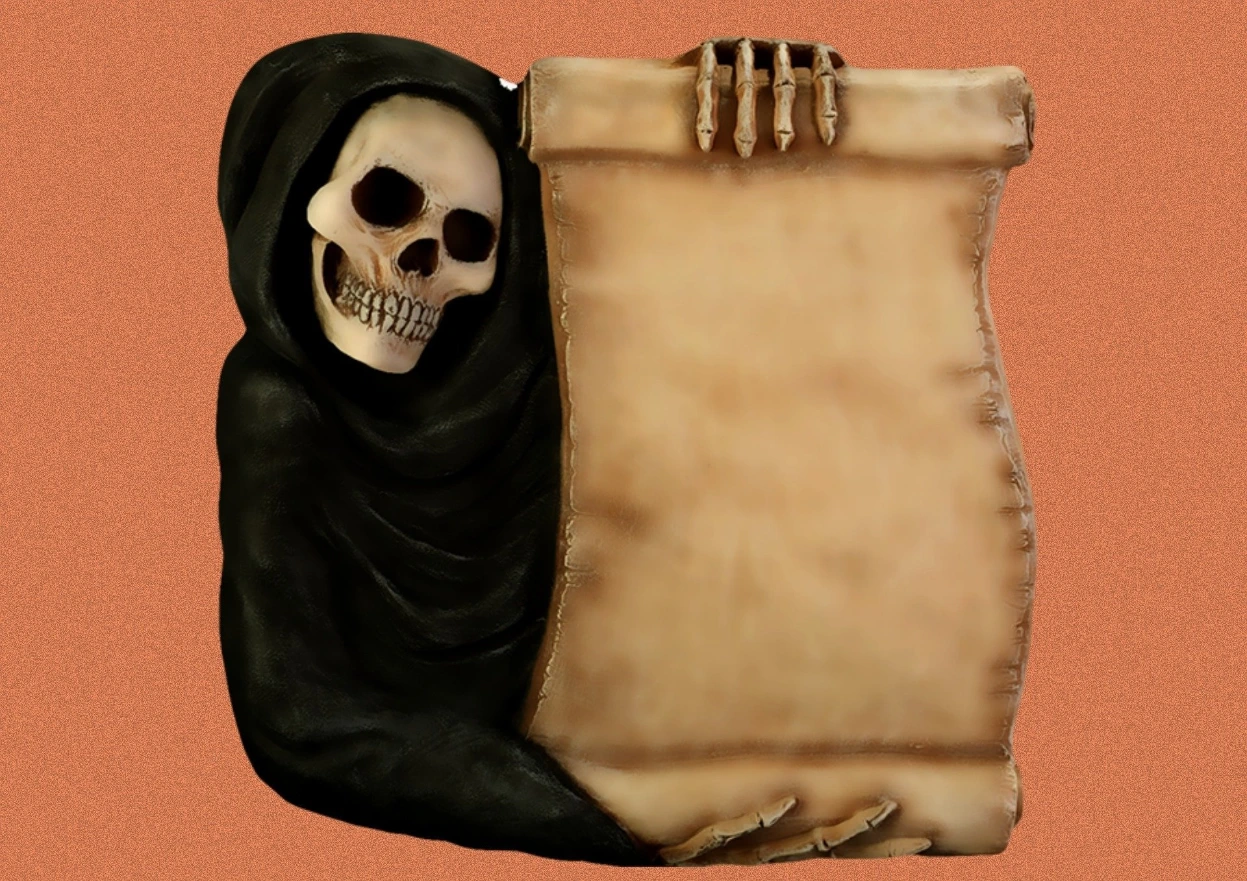
Image Credits: Pixabay
“We live twice: once in the moment, and once in the memory of others. My fear is not death — it is silence.”
What I fear the most is that my life will pass unnoticed. That my name won't matter in the history of the world.
I carry that fear like a small stone in my pocket. It is not always heavy, but it is always there. Sometimes I forget it for hours, even days, while I work, laugh, eat, and scroll through the ordinary motions of living. But in the quiet moments — when the room is dark and my thoughts have space to stretch — I feel it again. A whisper asking: Will any of this remain when I am gone?
This fear is not loud or dramatic. It does not scream. It hums. It is the steady awareness that billions have lived before me, and billions will live after, and most of their names — like mine — will dissolve into the vast anonymity of time. History remembers only a few. The rest of us are footnotes erased by the weather.
And yet I wake up each morning with the stubborn belief that my life should mean something.
I suspect this is one of the quiet contradictions of being human. We are fragile and temporary, but our inner worlds feel infinite. Inside me is a landscape of memories, ambitions, regrets, and private victories that feel monumental. I am the protagonist of my own story. Every person is. But when I step back and look at the scale of the universe, I see how small that story is. A flicker. A breath. A brief arrangement of atoms pretending to be permanent.
The philosopher in me understands this intellectually. I know that meaning is not handed down by history books or engraved in monuments. Meaning is constructed in the intimate spaces of experience — in relationships, in work, in moments of attention. But the child in me still longs for something grander. I want proof that I was here. Evidence that my existence carved a visible line through the world.
This longing is ancient. It is written into our myths and monuments. Civilizations built pyramids, temples, and cathedrals not only to honor gods but to resist oblivion. We carve names into stone because we fear the eraser of time. We write books, compose music, raise children, and build businesses as if each act were a small rebellion against disappearance. I think about my own small attempts to leave a mark — the frames I make, the spaces I design — and wonder if they will whisper anything of me once I’m gone.
When I examine my fear closely, I realize it is not just about recognition. It is about continuity. To be forgotten feels like a second death — one that arrives after the body is gone. Memory is a kind of afterlife. As long as someone remembers you, a fragment of you persists. When memory fades, it feels as though you never existed at all.
This is, of course, an illusion. Existence is not validated by remembrance. A tree that falls in a remote forest still falls, even if no one hears it. A life lived in obscurity is no less real than a life celebrated in textbooks. But knowing this does not entirely quiet the emotional instinct to matter on a larger scale.
I often think about the people whose lives quietly shaped mine — teachers, friends, strangers who offered a word of kindness at the right moment. They will not appear in history books. Their names will not echo through centuries. And yet, without them, I would be a different person. Their influence is invisible but profound. They are proof that impact does not always announce itself with fanfare. I remember my mother, in the early hours before sunrise, teaching me patience simply by showing up and never giving up on me. These are the moments that quietly define us.
Perhaps this is where my fear begins to soften. I start to see that significance is not measured only by public recognition. It is measured by the ripples we create in the lives around us. A conversation can alter the trajectory of a day. A gesture of compassion can echo through generations. Influence is often quiet, but it is not insignificant.
Still, I wrestle with the tension between private meaning and public legacy. There is a part of me that wants to leave behind something tangible — a body of work, a creation, a contribution that stands independent of my presence. I want to look at the world and say, I added this. This did not exist before me. It is a deeply human desire: to transform the raw material of existence into something that carries our signature.
But I have also begun to question the assumption that history is the ultimate judge of value. History is selective and imperfect. It remembers what aligns with power, narrative, and accident. Countless lives of courage, creativity, and love have vanished without record. Their absence from history does not negate their worth.
If I anchor my sense of purpose entirely in historical remembrance, I hand my self-worth to forces beyond my control. I become dependent on an audience I will never meet. That is a fragile foundation for a life.
Instead, I am learning to consider a quieter form of legacy. Not the legacy of fame, but the legacy of presence. How fully did I inhabit my days? How honestly did I speak? How generously did I act? These questions are less glamorous, but they are more accessible. They return power to the realm of choice.
There is a paradox here. When I focus obsessively on being remembered, I become distant from the present moment. I treat my life as a performance for a future audience. But when I immerse myself in the act of living — in the craft of my work, the depth of my relationships, the texture of ordinary moments — I create the conditions for authentic impact. Ironically, the pursuit of genuine engagement may be the closest thing to immortality we can achieve.
I am reminded that every human life is a thread woven into a vast tapestry. Most threads are not individually visible from a distance, yet the image would collapse without them. My fear of invisibility assumes that only the prominent threads matter. But the strength of the tapestry depends on the countless unseen connections.
This is why I linger on my morning walks through my hood, watching children play in the dusty streets or elders sitting quietly outside their homes. These ordinary lives carry extraordinary value — even if no one will write about them. And I realize: my own life is intertwined with theirs, whether or not history acknowledges it.
This realization does not erase my ambition. I still want to build, to create, to leave marks that endure. But my relationship with that desire is evolving. I am trying to shift from a hunger for validation to a commitment to contribution. The difference is subtle but profound. Validation seeks applause; contribution seeks usefulness. One is fragile, the other resilient.
There are days when the fear returns with sharp clarity. I imagine the distant future, a world in which my name has dissolved into dust. At first, this thought feels like an accusation: You were not enough. But if I sit with it long enough, it transforms. The future’s indifference becomes a kind of liberation. If oblivion is inevitable, then the pressure to perform for eternity dissolves. What remains is the invitation to live fully now.
In this light, obscurity is not a failure. It is the default condition of existence. To accept it is to align with reality. And within that acceptance lies a surprising freedom. I am free to pursue excellence not because it guarantees remembrance, but because the pursuit itself is meaningful. I am free to care deeply about my corner of the world without demanding that the entire world care in return.
I think about the small rituals that compose my days: the rhythm of work, the warmth of conversation, the quiet satisfaction of solving a problem. These moments do not aspire to historical significance. They aspire to presence. And presence, I am discovering, is a form of richness that does not depend on scale.
The fear of being forgotten has taught me something unexpected. It has sharpened my awareness of time. It has forced me to confront the finitude of my life and to ask what deserves my attention. In this sense, the fear is not an enemy but a guide. It points me toward what matters by reminding me that time is limited.
I no longer interpret the possibility of anonymity as a verdict on my worth. Instead, I see it as a shared human condition. We are all temporary travelers in an ancient world. Our task is not to outlast time, but to engage with it meaningfully while we can.
If my name never enters the grand narrative of history, I can still participate in the intimate narratives of the people around me. I can still shape the texture of my immediate environment. I can still create moments of beauty, clarity, and kindness. These acts may not echo through centuries, but they resonate in the present — and the present is where life actually occurs.
When I return to that original fear — that my life will pass unnoticed — I notice that it has changed shape. It is no longer a demand for fame. It is a call to attention. It asks me to notice my own life as I am living it. To witness my experiences with care. To treat my days as worthy of observation.
Perhaps the deepest tragedy is not being forgotten by history. Perhaps it is failing to notice our own lives while we are inside them. If I rush through my days obsessed with distant recognition, I risk overlooking the quiet miracles already unfolding around me.
So I make a private promise: to live in such a way that, even if the world forgets my name, I will not forget my own experience. I will engage with my work as an act of expression. I will approach my relationships with sincerity. I will cultivate curiosity about the world and compassion for the people within it.
In doing so, I create a legacy that is both humble and profound. It is not etched in stone or recorded in textbooks. It exists in the quality of my attention, the integrity of my actions, and the subtle influences I leave in the lives I touch.
And maybe that is enough.
Because when I look closely, I see that history itself is built from countless lives that feared obscurity and lived anyway. They woke up, worked, loved, struggled, and dreamed under the same sky. Their names may be gone, but their existence contributed to the world I now inhabit. I am a beneficiary of their unnoticed efforts.
In that sense, I am already part of a continuum larger than recognition. I am both an inheritor and a contributor. My life is a brief but genuine note in an endless composition. It may not be a solo that echoes through eternity, but it is a necessary part of the harmony.
And when I accept this, the stone in my pocket feels lighter. The fear does not vanish, but it becomes companionable. It reminds me to live deliberately, to create with care, and to measure my life not by its visibility in history, but by its depth in the present.
If my name fades, let it fade after a life fully inhabited. Let it dissolve having loved, built, questioned, and paid attention. In that quiet fullness, I find a form of meaning that does not depend on remembrance.
And for the first time, that feels like enough.
THE END!
TAGS
Goodreads | Greatness | Life | Letters
ABOUT
Meditations, confessions, reflections, and everything in between.