My Friends By Fredrik Backman (Spoiler Free Discussion).
Of Friendship, Grief, And The Quiet Violence Of Growing Up.
🕒 Monday, January 05, 2026 | By Augus.
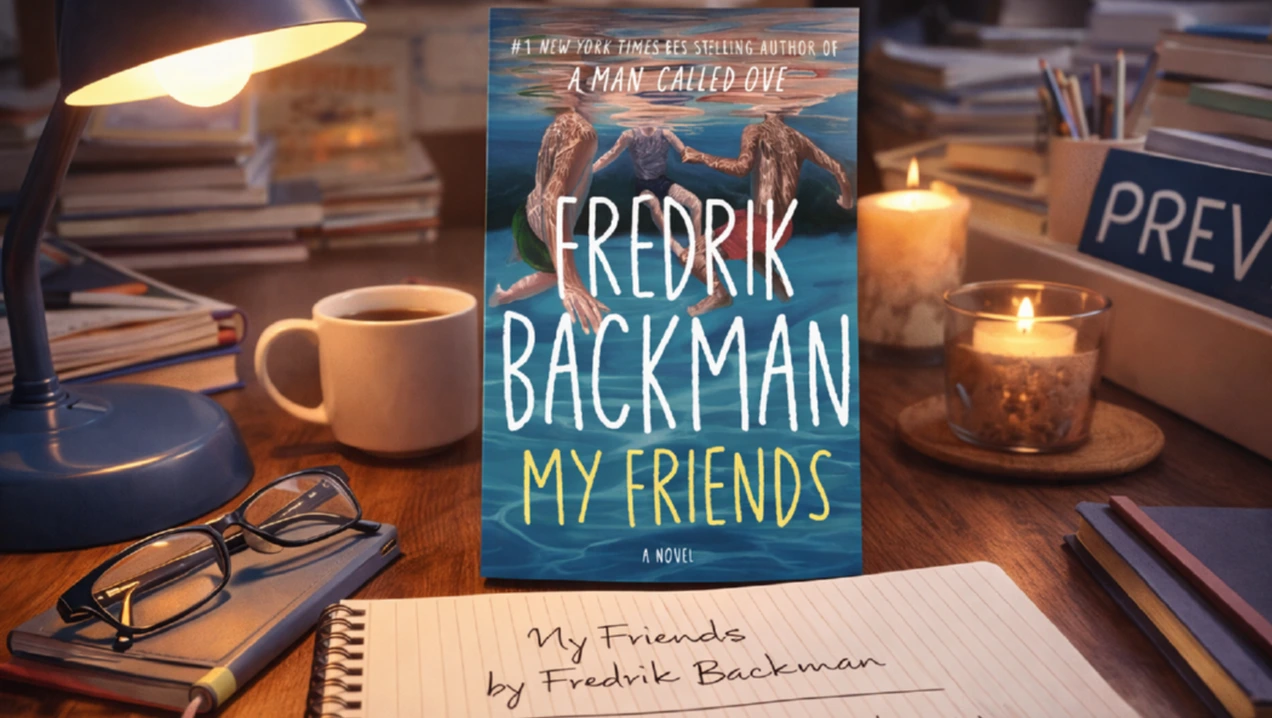
Image Credits: Tectegic Solutions
The Heart of My Friends
1. Friendship as Survival
At its core, My Friends is not a story about happy childhoods — it’s about endurance.
The friendships in the novel are not casual or convenient. They are lifelines. Backman portrays friendship as something that:
- Shields children from neglect and loneliness
- Gives language to pain when adults refuse to listen
- Creates a private world where survival feels possible
These friends don’t save each other by fixing life — they save each other by witnessing it together.
2. Childhood Trauma and Adult Failure
Without being graphic or sensational, the book quietly indicts the adult world.
Backman explores:
- How systems meant to protect children often fail them
- How adults underestimate the emotional intelligence of teenagers
- How loneliness can be invisible when it doesn’t look dramatic
The novel suggests that neglect can be as damaging as violence, and that silence can wound just as deeply as cruelty.
3. The Painting: What It Means (Not What It Shows)
The painting at the center of the novel is deliberately misunderstood by most people.
To the outside world, it’s:
- Beautiful
- Valuable
- Open to interpretation
But to those who lived it, the painting is:
- A frozen moment of safety
- Proof that joy once existed
- A record of friendship before the world complicated everything
The key idea:
Art doesn’t capture reality — it captures what mattered.
The painting isn’t about the sea, the bodies, or the composition.
It’s about belonging.
4. Memory vs. Truth
Backman plays gently with the idea that:
- Memories are unreliable
- Stories change depending on who tells them
- Truth is often emotional rather than factual
The novel doesn’t ask what exactly happened —
it asks what stayed with you.
This makes the book feel intimate, almost confessional, as if the reader is being trusted with something fragile.
5. Grief Without Romance
Grief in My Friends is not poetic or dramatic.
It is:
- Quiet
- Lingering
- Unresolved
Backman resists neat healing arcs. Instead, he shows how grief:
- Shapes personalities
- Alters relationships
- Becomes something you carry rather than conquer
Healing, here, doesn’t mean forgetting. It means learning how to live alongside loss.
6. Who the Characters Represent (Without Naming Them)
Rather than focusing on plot, Backman uses characters as emotional archetypes:
- The quiet one who observes and remembers
- The protector who turns anger into armor
- The reckless one hiding fear behind bravado
- The steady one who holds everyone together
Together, they form a kind of emotional ecosystem — each compensating for what the others lack.
7. What the Book Is Ultimately Saying
Without spoiling anything, My Friends seems to whisper this truth:
Some friendships don’t end —
they just become stories, paintings, silences, and scars.
And perhaps more importantly:
Being seen, even briefly, can save a person for a lifetime.
ADIOUS!