My Friends By Fredrik Backman.
Of Friendship, Grief, And The Quiet Violence Of Growing Up.
🕒 Monday, January 05, 2026 | By Augus.
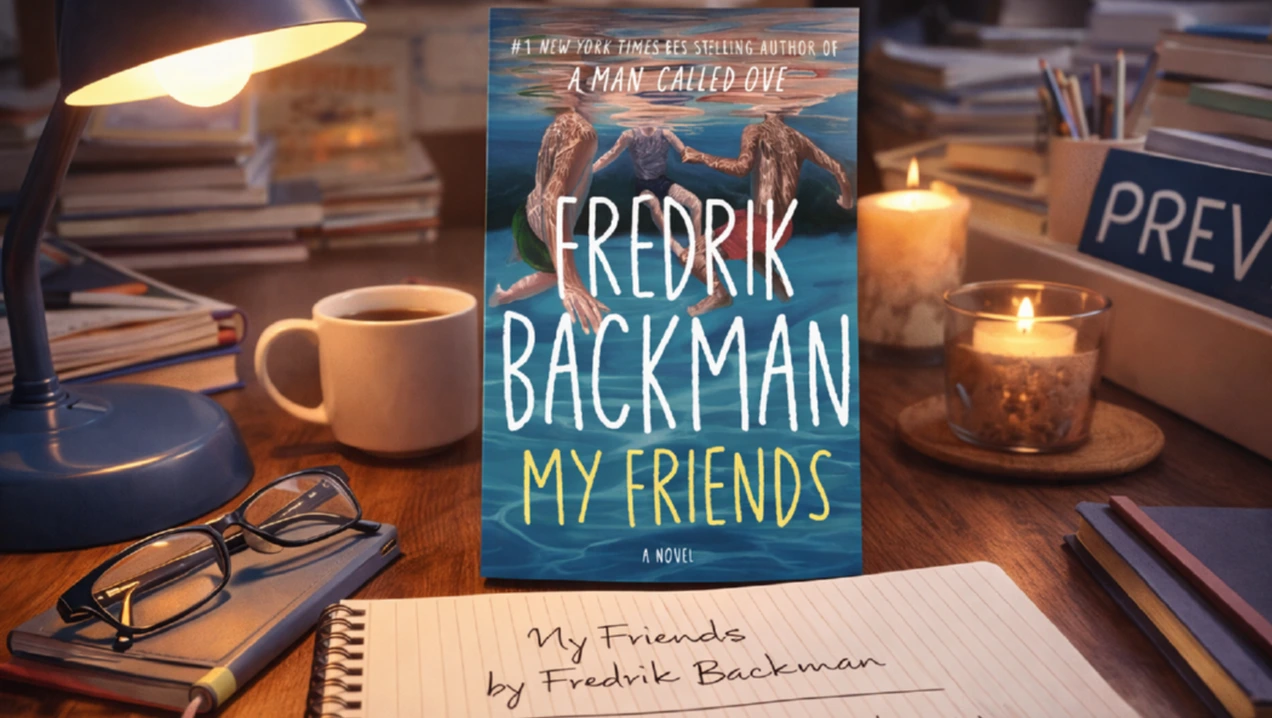
Image Credits: Tectegic Solutions
Fragile hearts break in palaces and in dark alleys alike.
Fragile hearts break in palaces and in dark alleys alike.
Introduction & Overall
Impression.
Title: My FriendsAuthor: Fredrik BackmanGenre: Literary fiction / Contemporary fiction
Title: My Friends
I didn’t plan to love Fredrik Backman's 'My Friends' this much. In fact, I went into it the way I enter most Backman novels now—guarded, slightly skeptical, telling myself, Okay, let’s see which part of my emotional life you’re about to mess with this time. But somewhere between the quiet humor, the aching silences, and the painfully familiar humanity, the book disarmed me. By the time I finished, I felt like I’d been sitting on a bench at dusk, talking about life with people who somehow knew me better than I knew myself.
This is a book about friendship, yes—but not the Instagram version. Not the loud, celebratory, always-present kind. This is about the friendships that form in the cracks of life. The ones built from shared loneliness, unspoken understanding, and showing up even when you don’t know what to say. Backman, once again, proves that he understands human beings in their most ordinary and devastating forms.
If you’ve read A Man Called Ove, Beartown, or Anxious People, you’ll recognize his signature immediately: humor used as a shield, tenderness disguised as sarcasm, and emotional punches delivered when you least expect them. But My Friends feels quieter. More intimate. Like a conversation you didn’t know you needed.
Synopsis: (Spoiler-Free)
At its core, My Friends revolves around a small group of people whose lives intersect in unexpected ways. These are not heroic characters in the traditional sense—no grand achievements, no dramatic entrances. Just regular people carrying invisible weights. People who are lonely in a crowded world. People who have learned how to survive, but not always how to live.
The story unfolds gently, moving between perspectives, memories, and moments that seem insignificant at first—but slowly reveal their importance. Backman doesn’t rush the plot. Instead, he lets relationships breathe, allowing us to see how friendships are formed not through big moments, but through small acts of kindness, shared jokes, and quiet loyalty.
Nothing explosive happens. And yet, everything does.
Characters: Painfully Human, Deeply Relatable.
This is where Backman shines—and where My Friends truly earns its title.
The characters feel like people you already know. Or worse—people you were at some point in your life. The awkward friend who tries too hard. The quiet one who notices everything but says little. The one who masks pain with humor. The one who believes they are easily replaceable.
What I loved most is that Backman doesn’t romanticize them. These characters are flawed, sometimes irritating, sometimes selfish, sometimes painfully passive. But that’s what makes them real. You don’t love them because they’re perfect; you love them because they’re trying.
There were moments when I caught myself thinking, I’ve been this person. Other times, I’ve known this person. And occasionally, I failed this person. That kind of recognition doesn’t come from shallow character writing—it comes from deep emotional observation.
Plot & Structure: Quiet but Purposeful.
If you’re looking for a fast-paced, plot-driven novel, this might frustrate you. The story doesn’t sprint; it walks. Sometimes it pauses. Sometimes it sits with discomfort longer than you’d expect.
But that slowness is intentional. The structure mirrors real life—how friendships don’t form in neat arcs, how understanding someone often comes too late, how moments only make sense in hindsight.
Backman layers the narrative carefully. Small details early on gain weight later. Casual conversations echo back with new meaning. The pacing rewards patience. By the end, you realize that the plot wasn’t about what happened, but about who stayed.
Themes & Ideas: Loneliness, Belonging, and Chosen Family.
This book is soaked in themes Backman knows intimately:
- Loneliness in modern life – how easy it is to feel invisible even when surrounded by people.
- Friendship as survival – not as something cute or optional, but as a lifeline.
- The fear of being a burden – a feeling many of us carry quietly.
- Chosen family – the people who become home, even when they weren’t meant to.
What struck me hardest is how the book acknowledges that friendships don’t always save us in dramatic ways. Sometimes they just keep us breathing. Sometimes they just make the days less heavy. And sometimes, that’s enough.
Writing Style: Warm, Witty, and Wounding.
Backman’s writing style is deceptively simple. Short sentences. Casual observations. Humor that sneaks in sideways. But underneath that simplicity is precision. Every line feels considered.
He uses humor the way people use jokes in real life—to soften pain, to avoid saying the thing that hurts too much to name. I laughed often. Then paused. Then felt something tighten in my chest.
There’s a conversational tone to the writing, like the author is sitting across from you saying, “I know. Me too.” That intimacy makes the emotional moments hit harder.
Effectiveness: Did It Do What It Set Out to Do?
Absolutely. My Friends doesn’t try to change the world. It tries to make you look differently at the people in your life—and at yourself. It succeeds because it’s honest.
I closed the book feeling quieter. More reflective. Thinking about people I haven’t checked on in a while. Thinking about friendships I underestimated. Thinking about the ones that carried me through seasons I didn’t think I’d survive.
That, to me, is a successful book.
My Opinion.
What Worked Well:
- Deeply relatable, emotionally honest characters.
- Thoughtful exploration of friendship and loneliness.
- Beautiful balance of humor and heartbreak.
- Writing that feels intimate and human.
What Didn’t Work:
- Slow pacing may not appeal to everyone.
- Lack of dramatic plot twists.
- Emotionally heavy in subtle ways—not an “easy” read.
Context & Comparisons.
If you’ve loved Backman’s previous works, this will feel familiar—but more restrained. Compared to Anxious People, it’s less chaotic. Compared to Beartown, it’s less explosive. But emotionally? It cuts just as deep.
If you enjoy books that focus on internal lives rather than external drama—books that sit with feelings instead of solving them—this belongs on your shelf.
Conclusion & Recommendation.
My Friends is not a book you rush through. It’s a book you live with for a while. One that reminds you that friendship isn’t about constant presence, but consistent care. That sometimes the people who save us don’t even know they’re doing it.
I’d recommend this book to anyone who has ever felt out of place, overlooked, or quietly grateful for one person who stayed. If you’re in a season of reflection, transition, or emotional honesty, this book will meet you there.
It’s not loud. It doesn’t beg for attention. But it stays with you.
And honestly? That’s the kind of friend we all need.***
Enjoy a clear summary of My Friends by Fredrik Backman here. If you'd like a spoiler-free discussion of the themes, characters, or meaning behind the painting in the book, find it here.
ADIOUS!